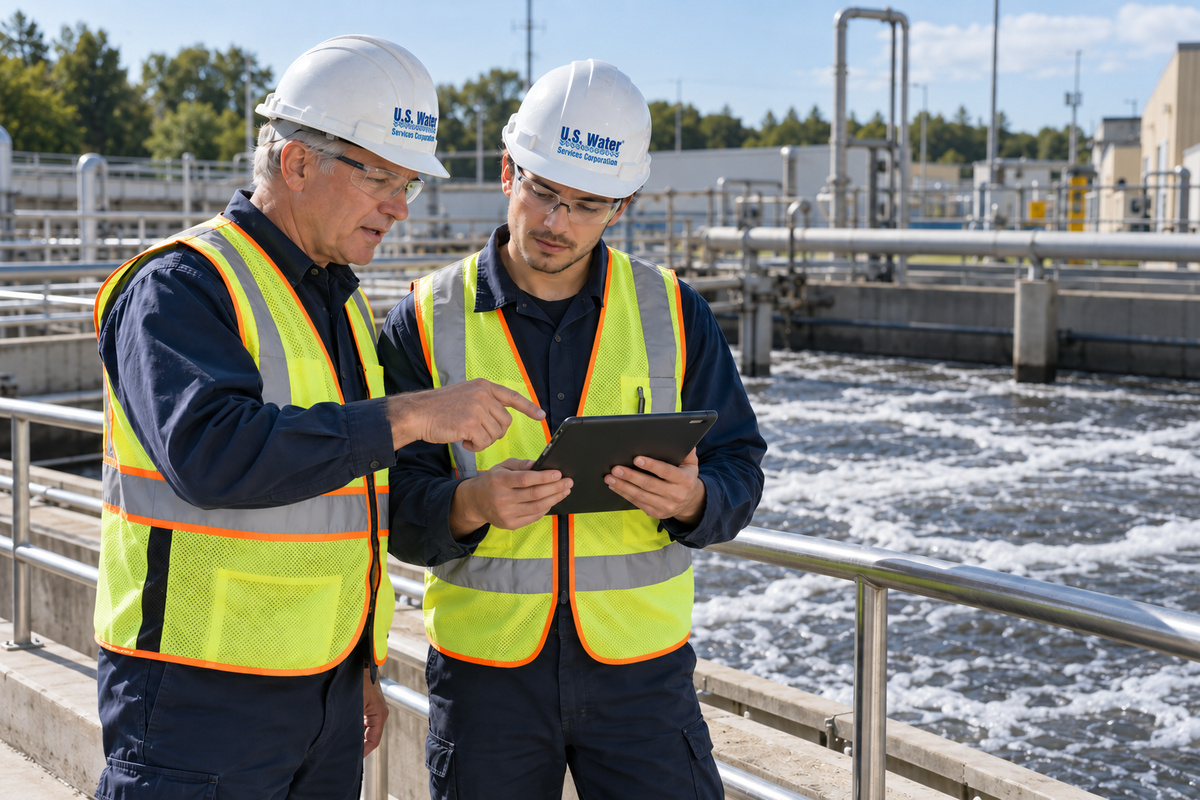
A water or wastewater treatment plant represents a major investment in infrastructure, equipment, and technology. Protecting that investment also requires skilled people who understand the process, recognize developing problems, and respond when conditions change.
As experienced operators approach retirement, facility owners face two connected challenges: recruiting their replacements and preserving the institutional knowledge those employees have developed over decades. Meanwhile, increasingly sophisticated treatment systems require employees to build new technical skills.
Preparing tomorrow’s workforce begins with capturing what today’s operators know.
Preserving Experience
An experienced operator knows more than the steps in an operating procedure. They understand how the plant responds to heavy rainfall, recognize changes in equipment sounds, and notice subtle shifts in biological treatment. They also know the facility’s history, what has failed, what has worked, and why certain adjustments are necessary.
When that knowledge remains undocumented, retirement can leave a significant gap in a facility’s ability to troubleshoot problems and maintain reliable performance.
Facility owners can preserve this experience through a few deliberate actions:
- Establish mentorships. Pair experienced operators with newer employees and make time to explain both the task and the reasoning behind it.
- Document lessons learned. Record recurring problems, unusual operating conditions, equipment history, and successful corrective actions.
- Use real operating scenarios in training. Walk employees through wet-weather events, equipment failures, and process disruptions.
- Make knowledge accessible. Maintain standard operating procedures (SOPs), troubleshooting guides, and short instructional videos that staff can readily use.
These efforts should begin well before an employee announces plans to retire.
Building Skills for Modern Operations
Automation, process control monitoring, online instrumentation, and data analysis can help operators monitor performance and identify changes. Their value depends on employees who can interpret the information and determine the appropriate response.
An abnormal reading, for example, may reflect a process upset, an equipment problem, or a faulty sensor. Distinguishing between them requires process knowledge and sound judgment.
Training should therefore connect process fundamentals with skills in instrumentation, mechanical and electrical systems, automated controls, data interpretation, and cybersecurity. Employees need to understand how the technology works and how it relates to the treatment process.
Making Wastewater a Career of Choice
Recruiting starts with a clearer picture of what wastewater professionals do. The work combines environmental protection, science, technology, mechanics, and problem-solving. In municipal and industrial facilities alike, operators protect public health and waterways, support regulatory compliance, and keep essential treatment systems running reliably.
Employers can strengthen recruitment and retention by communicating the value of this work and offering clear paths for training, certification, and career advancement.
Workforce planning deserves the same attention as equipment replacement and capital improvements. Identifying future staffing needs, developing employees, and preserving institutional knowledge today will help facilities maintain reliable operations through tomorrow’s transitions.
U.S. Water helps facility owners strengthen operations through experienced staffing, operator training, and technical support. Contact our U.S. Water team to discuss how we can help prepare your facility and workforce for the future.